
Turning AI potential into practice.
I help educators and organizations use AI to improve teaching, learning, and work.
About
I'm an Education, Technology, and Innovation Specialist at Michigan State University's Colleges of Human and Osteopathic Medicine, turning emerging AI capabilities into practical, responsible tools for teaching and learning. I bring over 20 years of experience in instructional design, faculty development, and educational technology leadership, with a Ph.D. in Educational Psychology & Educational Technology from MSU.
Projects
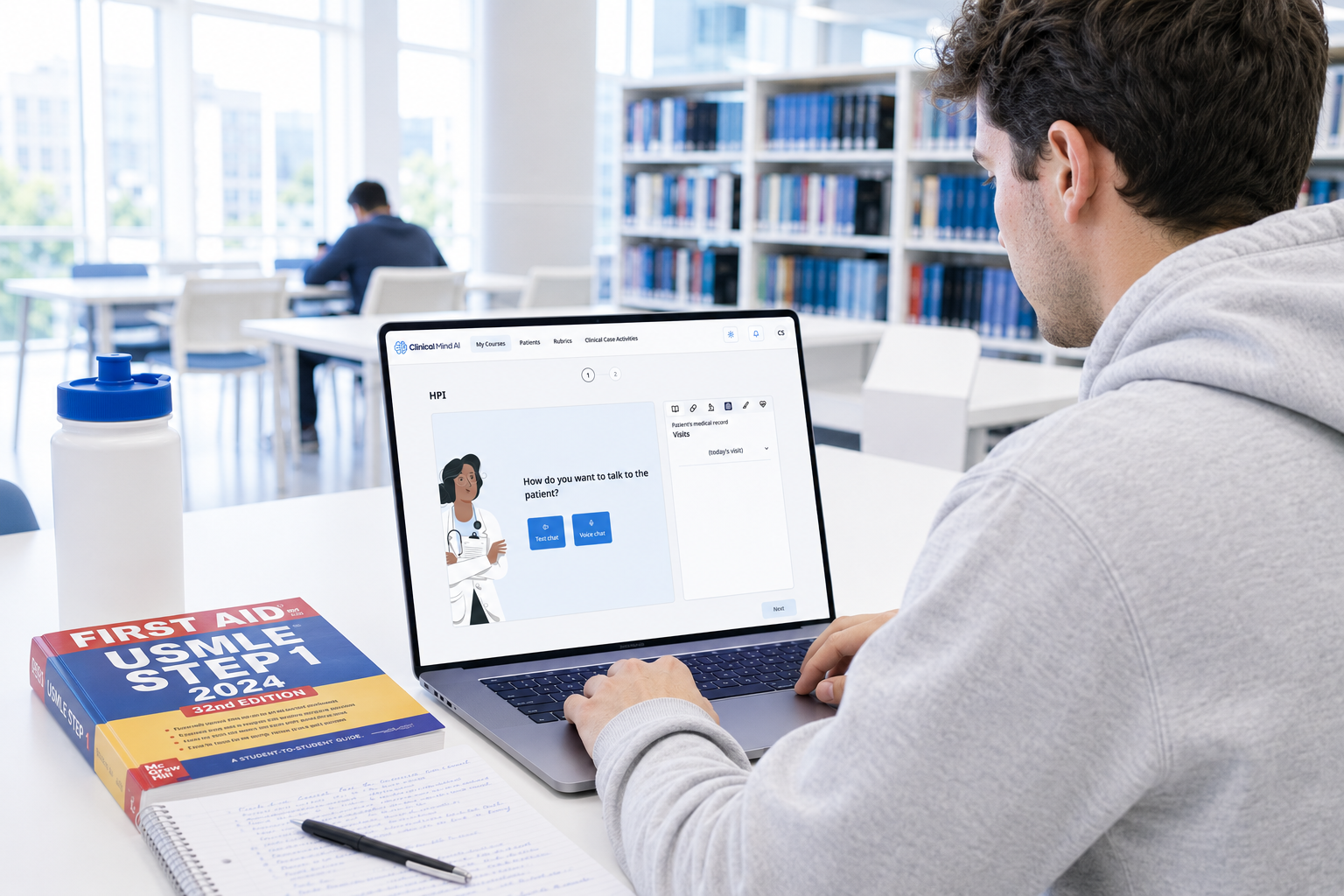
ClinicalMind AI
An AI patient simulator for practicing clinical communication and receiving structured feedback.
Role: PI, MSU–Stanford research collaboration
Audience: Medical Students
An AI-based standardized patient encounter simulator that lets medical students practice clinical communication skills with an audio-only AI patient and receive structured feedback. I serve as Principal Investigator (IRB-approved) on the MSU side of a research collaboration with Stanford University.
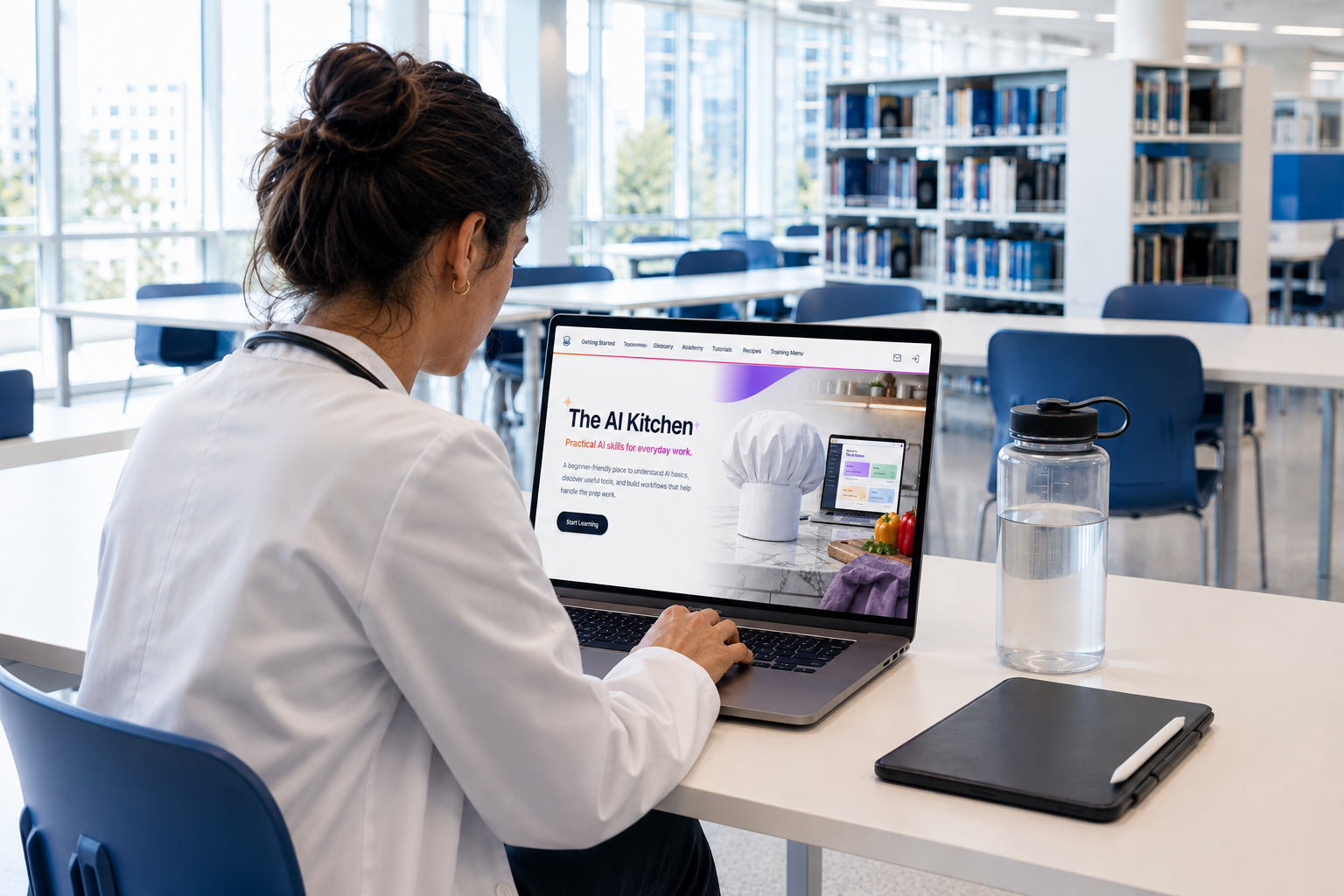
The AI Kitchen
An AI literacy hub with guided lessons, practice challenges, and practical resources for educators and students.
Role: Creator & Developer
Audience: Faculty, Staff & Students
The AI Kitchen is a self-designed AI literacy platform I built for faculty, staff, and students across MSU's Colleges of Human Medicine and Osteopathic Medicine. Using a "kitchen" metaphor, it pairs a prompting framework and governance guide with a searchable terminology glossary, a six-module interactive Academy with scored practice challenges, a curated tutorial library, and task-specific AI "Recipes" by tool. It serves as both a training hub and a live demonstration of applied instructional design.

OSCE Video Grader
An experimental tool that drafts rubric-based assessments to support faculty review of OSCE recordings.
Role: Creator & Developer
Audience: Medical School Faculty
Leverages Google Omni AI to help medical school faculty evaluate and score OSCE video recordings significantly faster and more cost-effectively, generating structured draft assessments to streamline faculty grading. Currently in the experimental testing phase.
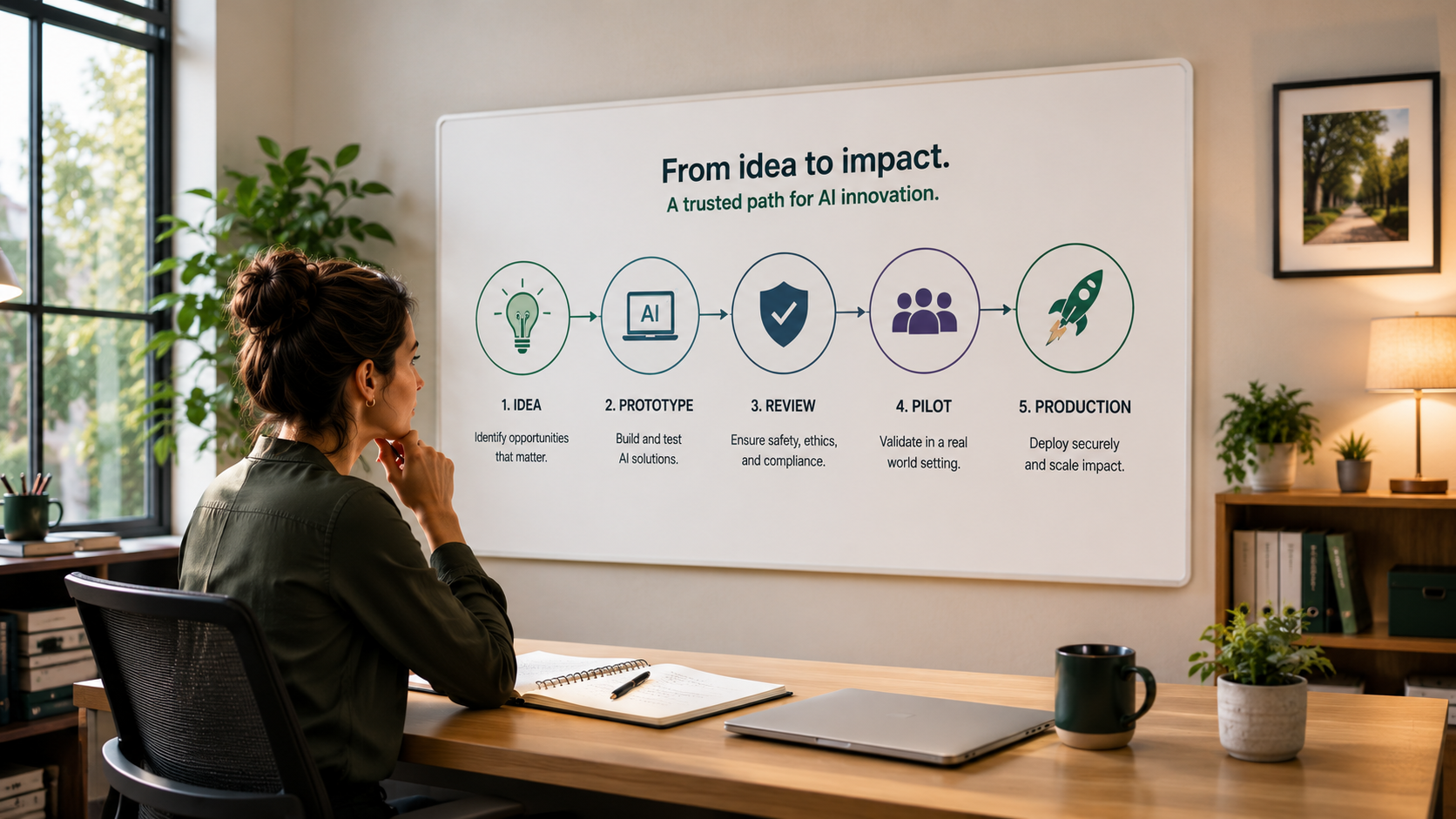
Prototype-to-Practice Pipeline
A pathway for turning educational AI prototypes into secure institutional applications.
Role: Creator
Audience: Medical School Faculty/Staff/Students
I designed the Prototype-to-Practice Pipeline, a practical pathway helping faculty, staff, and students use AI to develop educational applications through privacy-first design, including random identifiers for persistent sessions and secure identity reconciliation through institutional systems such as D2L.
Experience & Expertise
AI Strategy & Applied Innovation
Supporting responsible institutional AI adoption and building agent workflows, virtual patients, and assessment tools for medical education.
Faculty Development & Learning Design
Designing curricula and interactive learning experiences, with 15+ AI talks, workshops, and practical sessions for faculty and staff.
Research & Scholarship
Connecting educational practice with IRB-approved AI research, peer-reviewed publications, and national conference presentations.
Recognition
Publications
Peer-reviewed journal articles on AI feedback evaluation, curriculum alignment, and technology integration.
AI Talks & Webinars
Invited keynotes, skill-building workshops, and featured educational technology sessions.
Smarter with AI: Prompting, Evaluating, and Transforming Learning
Co-presented with Stacey Pylman, Ph.D., this workshop helps health sciences librarians apply AI responsibly through privacy and security discussions, literature review evaluation, and practical teaching strategies. Participants use the CDL and RAAT checklists, then choose, draft, check, revise, and share a resource for their own audience—building durable, transferable skills through inquiry and hands-on practice.
Future-Ready Physicians: Integrating Digital Health Competencies in Osteopathic Medical Education with Michigan State University Innovation Spotlight
An innovation spotlight on integrating AI and digital health competencies into clinical education at Michigan State University.
AI in Action: Practical AI Workshop for Faculty & Staff
A live, hands-on workshop guiding medical school faculty and staff through practical AI workflows—covering institutional data privacy essentials, prompt engineering with the 'Ask me questions before proceeding' technique, role-specific practice tracks (clinicians, basic science faculty, and staff), and practical task redesign. Participating faculty earned Continuing Medical Education (CME) credits.
Developing AI-Enhanced Curricula
Practical frameworks and pedagogical strategies for embedding generative AI competencies into medical school curricula.